
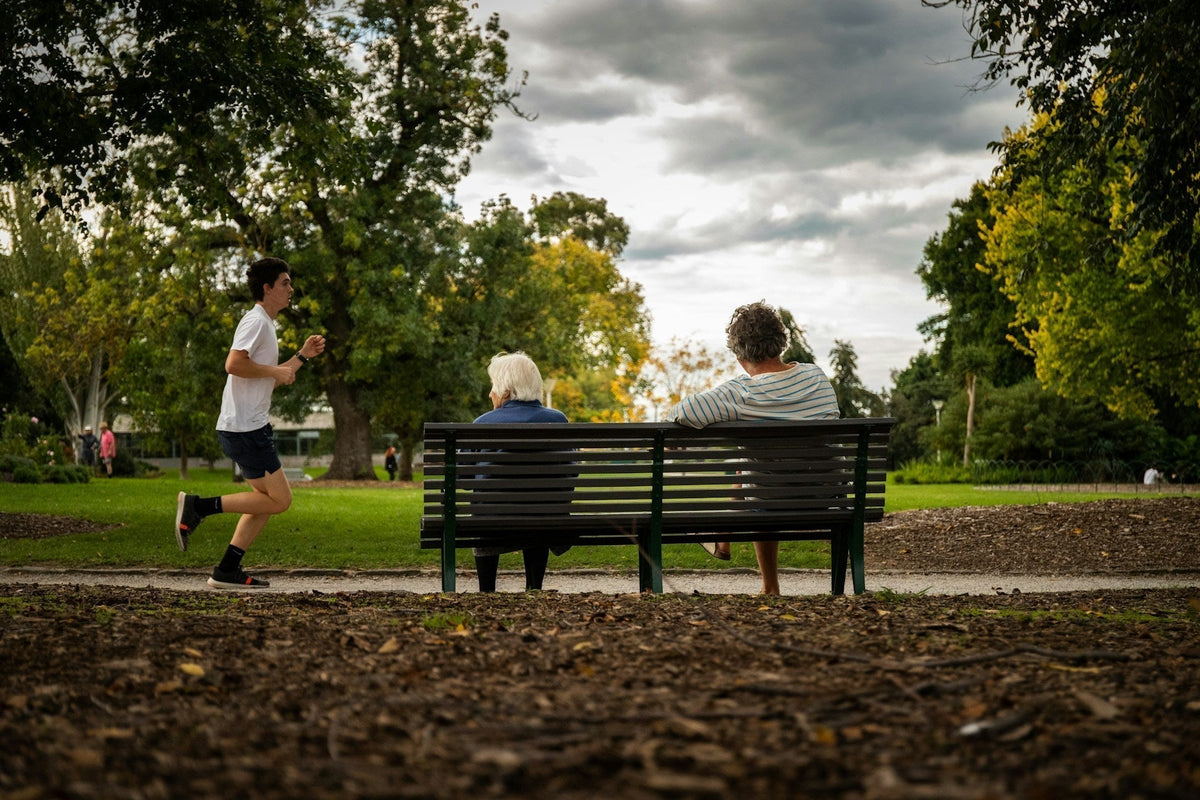
It’s Not Training Harder. It’s Recovering Smarter.
Most people assume staying athletic into your 40s, 50s, and beyond is about discipline and grit.
Train harder.
Push through soreness.
Outwork everyone your age.
But the real limiting factor isn’t effort.
It’s recovery.
As we age, the biology of repair changes. Muscle responds differently. Tendons remodel more slowly. Inflammation lingers longer. If you don’t adjust your recovery strategy, your training eventually stops working, or worse, leads to injury.
The good news? The science is clear: aging athletes can maintain strength, muscle mass, and performance, but recovery must become intentional.
Anabolic Resistance: Protein Matters More After 40
With age comes anabolic resistance — a reduced muscle protein synthesis (MPS) response to training and protein intake.
Older adults require higher per-meal protein doses to maximize MPS (Moore et al., AJCN, 2009). Leucine plays a key role in activating this process, with ~2–3g needed to stimulate mTOR signaling (Norton & Layman, J Nutr, 2006).
That’s why 25g whey protein plus ~3g leucine — as included in the Recovery Protocol Kit — aligns with evidence-based thresholds.
If you don’t hit the signal, you don’t get the repair.
Muscle Loss Accelerates With Inactivity
Adults lose 3–8% of muscle mass per decade after 30 (Janssen et al., J Appl Physiol, 2000). Even short-term disuse significantly reduces muscle protein synthesis (Wall et al., J Physiol, 2013).
Recovery isn’t just about repairing yesterday’s workout, it’s about preventing avoidable decline.
Connective Tissue Needs Support
Tendons and ligaments remodel more slowly with age. Collagen production declines, which can impair structural repair.
Collagen supplementation combined with exercise has been shown to improve joint pain and support connective tissue integrity (Clark et al., Curr Med Res Opin, 2008).
Recovery must address more than muscle alone.
Inflammation Lingers Longer
Low-grade chronic inflammation increases with age (“inflaming”) (Franceschi et al., Ann NY Acad Sci, 2000).
Omega-3s and curcumin have demonstrated anti-inflammatory effects and reductions in post-exercise inflammatory markers (Jouris et al., Clin J Sport Med, 2011; McFarlin et al., JISSN, 2016).
The goal isn’t eliminating inflammation, it’s preventing prolonged signaling that delays recovery.
5. Micronutrients Enable Repair
Tissue rebuilding requires:
- Vitamin C (collagen synthesis)
- Vitamin D (muscle function)
- B vitamins (energy metabolism)
Even mild deficiencies can slow recovery.
The Shift After 40
In your 20s, adaptation is automatic.
After 40, adaptation is conditional.
To stay athletic, you must:
- Hit adequate protein consistently
- Cross the leucine threshold
- Support connective tissue
- Modulate inflammation intelligently
The Recovery Protocol Kit integrates:
- 25g whey protein
- ~3g leucine
- Collagen peptides
- Omega-3s
- Curcumin
- Recovery-supportive vitamins
- Informed Sport Certification
It simplifies what aging physiology demands.
The Bottom Line
Staying athletic isn’t about pushing harder.
It’s about recovering smarter.
Muscle repair slows.
Inflammation rises.
Connective tissue adapts more slowly.
But when you support the biology of recovery, performance longevity becomes possible.
Because aging doesn’t eliminate athleticism.
Ignoring recovery does.

The Nuances of Recovery
Speeding Up Recovery