
Nutrition for Oral & Jaw Surgery: Drinkable Support When Eating Is Hard
Medically reviewed by Dr. Patrick Denard, orthopaedic surgeon, on October 8, 2026
Short answer: The best protein shake after jaw surgery is one you can drink with no chewing, that mixes thin enough for your jaw restriction, and that gives you real protein in every serving. Each OptiFuel packet has 25 g of whey protein and 3 g of leucine and is thin enough to drink through a straw or a wired jaw. If your surgeon says no straws, sip it from a cup. Expect some weight loss either way, and clear every supplement with your surgical team.
This guide covers orthognathic (jaw) surgery, a wired or banded jaw, and other oral surgery such as wisdom teeth removal. For other operations, see our guides to what to eat after surgery, by procedure.
Why Nutrition Matters After Oral & Jaw Surgery
This is one of the few surgeries where the recovery itself makes eating difficult. When your jaw is restricted or wired and you're limited to liquids, calorie and protein intake naturally fall, while your body is working to heal. In a prospective study of 60 jaw (orthognathic) surgery patients, weight and muscle mass dropped after surgery (muscle by up to about 1.8 kg on average) and had not fully returned to pre-surgery levels at the last follow-up. (Gasimov et al., J Oral Maxillofac Surg, 2025) [1]
Can a nutrition drink help? The evidence is mixed. In a small randomized trial of 28 jaw surgery patients, adding an oral nutritional supplement to dietitian counseling reduced weight loss at two and four weeks, but overall nutritional status was no different at 12 weeks. (Prachasartta et al., J Multidiscip Healthc, 2024) [2] A larger randomized trial of 150 patients found no significant effect of structured dietary programs on weight loss or body composition. (Mogensen et al., J Oral Maxillofac Res, 2026) [3] Getting enough protein while you can't chew is still worth planning for; just expect some weight loss either way.
How to Choose a Protein Shake After Jaw Surgery
A shake that works at the gym may not work with a jaw that cannot open. Before you buy, check four things.
- Can you get it in? It has to be a true liquid that passes your wires, bands or splint, through whatever your surgeon allows: a straw, a syringe or a cup. Thick shakes and anything with seeds or bits are harder to manage.
- How much protein per serving? On a liquid diet, every glass has to work hard. Look at the grams of protein on the label, not just the calories.
- Can you stick with it? You may be drinking the same thing for weeks. Pick a flavor and a mixing liquid you will actually finish.
- Does it fit your health needs? Check for milk if you have a milk allergy, and read the carbohydrate and sugar lines if you have diabetes. Ask your surgical team or dietitian if you are unsure.
Here is how one OptiFuel packet lines up on those points, from the product label.
| What to check | OptiFuel (per packet) |
|---|---|
| Protein | 25 g (non-denatured whey plus hydrolyzed collagen), with 3 g of leucine |
| Texture | Powder you shake into 12 to 16 oz of water, milk or non-dairy milk; thin enough for a straw or a wired jaw |
| Flavors | Chocolate or vanilla |
| Carbohydrate and sugar | 8 to 9 g carbohydrate, 3 g added sugar |
| Also inside | Glutamine, vitamin C, vitamin D, omega-3 fish oil, curcumin (turmeric) and other vitamins |
| Allergens and testing | Contains milk. Gluten-free, made in the USA, Informed Sport tested |
OptiFuel is not a meal replacement. It is one daily serving of protein and nutrients that sits alongside the other liquid meals your team recommends. If you want to compare it with plain whey, hospital-style shakes and other surgery kits on price and protein, our Surgical Protocol Kit review lays out the labels side by side.
How much protein do you need on a liquid diet?
European clinical nutrition guidelines (ESPEN) estimate that people around surgery need about 1.5 g of protein per kg of ideal body weight a day.[7] At a 70 kg ideal weight that is 70 x 1.5 = 105 g a day, so one 25 g OptiFuel packet covers about a quarter (25 / 105 = 24%). The rest has to come from your other liquid meals. If you have kidney disease or have been told to limit protein, ask your doctor first.
| Ideal body weight | Protein at 1.5 g per kg a day | One OptiFuel packet covers | Left for other liquid meals |
|---|---|---|---|
| 55 kg (about 121 lb) | 55 x 1.5 = 82.5 g | 25 g, about 30% | 82.5 - 25 = 57.5 g |
| 70 kg (about 154 lb) | 70 x 1.5 = 105 g | 25 g, about 24% | 105 - 25 = 80 g |
| 85 kg (about 187 lb) | 85 x 1.5 = 127.5 g | 25 g, about 20% | 127.5 - 25 = 102.5 g |
These statements have not been evaluated by the Food and Drug Administration. This product is not intended to diagnose, treat, cure, or prevent any disease.
Your Three-Phase Protocol
Phase 1: Prepare (1 week before surgery)
Daily OptiFuel provides protein rich in leucine and glutamine, with vitamins including vitamin C, omega-3s, collagen and curcumin, so you go into surgery well nourished. Because you'll be on a restricted diet afterward, starting strong matters here. Take one packet a day, between meals. Before you start, share the ingredient list with your surgeon.
Phase 2: The Night Before Surgery
OptiCharge is your pre-op carbohydrate drink. Take 2 packets at bedtime the night before surgery, each mixed in 12 to 16 oz of water, then follow your surgical team's fasting rules exactly. Drinking a clear carbohydrate drink before surgery, instead of a long fast from midnight, is part of many enhanced recovery programs; a Cochrane review of 27 trials found it was associated with a slightly shorter hospital stay (about a third of a day), based on very low-quality evidence. [5] If you have insulin-dependent or poorly controlled diabetes, check with your care team before using any carbohydrate drink. Our guide to the carb loading drink before surgery covers timing in more detail.
Phase 3: Heal (the weeks after surgery)
This is where a drinkable protocol is practical. While you're on a liquid or soft diet, daily OptiFuel gives you protein and nutrients in a form you can actually consume. Vitamin C (which your body uses to make collagen), collagen, protein and glutamine provide building blocks your body uses for tissue repair. Restart it as soon as your surgical team clears you for liquids, and keep taking one packet a day as your diet moves forward.
Ships to your door before surgery day, with OptiCharge for the night before. HSA/FSA eligible. Already past surgery day? Start with the Recovery Protocol Kit instead.
Ideally, everyone on the Surgical Protocol Kit also takes the Recovery and Strength Mix daily.
These statements have not been evaluated by the Food and Drug Administration. This product is not intended to diagnose, treat, cure, or prevent any disease.
What Happens After You Start: A Realistic Timeline
Your surgeon decides when you move from liquids to pureed food, then soft food, then a normal diet. That schedule is different for a wisdom tooth, a broken jaw and a full orthognathic correction, so treat this as a map and fit the nutrition around your team's plan.
One hospital's diet stages after orthognathic surgery. Singapore General Hospital uses a full liquid diet from the day after surgery to week 2, pureed food from week 3 to week 6, soft food from week 7 to week 12, and a diet of choice from week 13, with hard foods avoided until 6 months after surgery. It recommends 1,500 to 2,000 ml of water a day.[8] Your own surgeon's schedule may differ, so use theirs.
If your jaw is wired. A University of Mississippi Medical Center handout says all food must be liquid, thin enough to go through a syringe or drink from a glass, and strained to remove seeds or fibers that can catch in the wires. It suggests 8 to 10 glasses of fluid a day.[9] Kaiser Permanente advises drinking or eating liquid foods 6 times a day rather than 3, sitting up while you eat, and keeping wire cutters with you at all times in case you throw up; your doctor will show you how to use them.[10]
| When | What you do | What to expect |
|---|---|---|
| About 1 week before surgery | Start one OptiFuel packet a day, between meals. Show your surgeon the label. Ask how you will drink after surgery: straw, syringe or cup. | A simple daily habit, so you go into surgery well nourished and already used to the drink you will rely on afterward. |
| The night before | If your team approves, drink 2 OptiCharge packets at bedtime, each in 12 to 16 oz of water. Then follow their fasting rules. | A Cochrane review linked carbohydrate drinks with a hospital stay about a third of a day shorter, on very low-quality evidence. [5] Treat it as part of your team's plan, not a promise. In a randomized trial of 252 adults having abdominal surgery, people who drank a carbohydrate drink the evening before and the morning of surgery felt less hungry and less anxious while they waited than people who fasted overnight.[11] That trial also used a morning dose, which OptiCharge instructions do not include, so the result may not transfer exactly. |
| Week 1 | Once you are cleared for liquids, restart one OptiFuel packet a day, using the straw, syringe or cup your surgeon allows. | Eating is hard and intake drops. A drink you can take with no chewing makes protein easier to get. |
| Weeks 2 to 6 | Keep the daily packet as your team moves you from liquids toward pureed and soft foods. Weigh yourself on the same scale each week. | Some weight loss is common. In one small trial, adding a nutrition drink to dietitian advice reduced weight loss at two and four weeks [2]; a larger trial of diet programs found no significant difference. [3] |
| After 6 weeks | As chewing returns and your team clears more foods, keep OptiFuel going and consider adding the Recovery and Strength Mix to rebuild. | Weight and muscle can take a while to come back. In one study they had not fully returned by the last follow-up [1], and in another, nutritional status was similar at 12 weeks with or without the drink. [2] |
If you lose 5 pounds or more in one week, call your doctor or dietitian.[9] Call your surgical team too if you cannot keep liquids down.
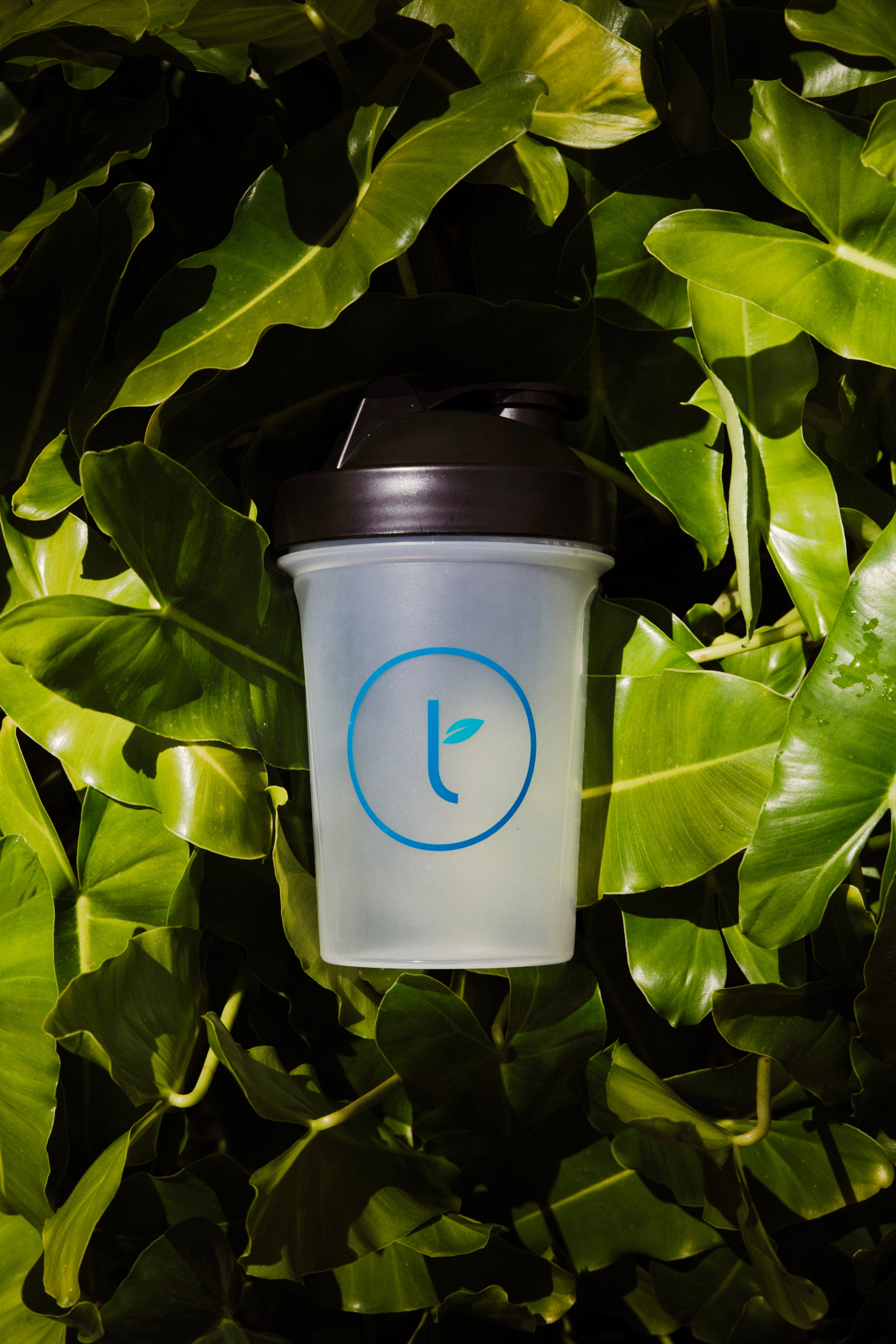
A day with OptiFuel. Shake one packet into 12 to 16 oz of water, milk or non-dairy milk in the kit's shaker bottle and drink it between meals. On a liquid diet it is one of several small liquid meals across the day, not the whole menu. When your team moves you to blended or pureed food, you can also stir a packet into a smoothie. Our quick OptiFuel recipes include a smoothie and a pudding; skip anything chewy, like the pancakes or protein balls, until your surgeon says solid food is fine.
These statements have not been evaluated by the Food and Drug Administration. This product is not intended to diagnose, treat, cure, or prevent any disease.
Want to Go Further? Add the Recovery and Strength Mix
Once you're moving back toward a normal diet and want to rebuild, the Recovery and Strength Mix adds creatine and arginine, the only Thrive product with either, to support muscle and strength after the restricted-diet weeks. It's offered as a 30-day supply, with a subscription option so you can continue for as long as you need it. A natural complement to OptiFuel as you recover. For how each common recovery supplement stacks up, see our guide to the best supplements for surgery recovery.
These statements have not been evaluated by the Food and Drug Administration. This product is not intended to diagnose, treat, cure, or prevent any disease.
Supplement safety before surgery
Thrive kits contain fish oil (omega-3s) and turmeric (curcumin) in low amounts. The evidence does not show that these amounts cause bleeding, so there is no need to stop OptiFuel before surgery. Your surgeon's instructions still come first. Tell your surgeon and anesthesia team about everything you take, including vitamins and herbal products. [6] If you take a blood thinner, ask about every supplement before you start.
Built Into Your Recovery, Not Added On
Thrive Protocol was developed by surgeons to fill a real gap in surgical care, and it's designed to work hand-in-hand with the plan your surgical team already has for you. Surgery corrects and repairs. Nutrition gives your body resources to work with while eating is difficult.
One serving a day, as a drink, no chewing required. Delivered before your surgery date.
It never replaces what your surgeon told you to do. Thrive Protocol works alongside your surgeon's instructions, and any dietitian guidance you've been given. Always follow your surgical team's guidance, especially their fasting and diet-progression instructions.
You've got enough on your mind. Let the protocol handle the nutrition so you can focus on healing.
Frequently Asked Questions
What is the best protein shake after jaw surgery?
The one you can drink with no chewing, that is thin enough for your jaw restriction, and that gives you real protein per serving. Each OptiFuel packet has 25 g of whey protein and 3 g of leucine and is thin enough for a straw or a wired jaw. Your surgical team's diet instructions come first, and a registered dietitian can help you plan the rest of your liquid meals.
My jaw will be wired or restricted. Can I drink it, and can I use a straw?
Yes, that's the situation it's built for. Each serving is a drink, mixed into water, milk or a smoothie, with no chewing required. It is thin enough for a straw or a wired jaw, but follow your surgeon's rule on straws. If they say no straws, sip it from a cup or use the syringe they give you.
Can a nutrition drink limit weight loss after jaw surgery?
Some weight loss is common after jaw surgery because eating is hard. In one small trial, adding a nutrition drink to dietitian counseling reduced weight loss in the first month [2], but a larger trial of structured diet programs found no significant difference [3]. A drink makes protein easier to get; it won't eliminate the challenge, and a registered dietitian's guidance is valuable alongside it.
Does nutrition affect how my mouth heals?
Soft tissue repair uses protein and vitamin C, which your body needs to make collagen. Research on vitamin C supplements and healing comes mostly from pressure ulcers and small studies (Bechara et al., 2022) [4], so think of nutrition as one piece alongside your surgeon's technique and your aftercare.
When should I start, and what if my surgery is already done?
Ideally 1 week before your surgery date, so you go in well nourished. The protocol then continues through the weeks of recovery. If surgery is already behind you, or you are planning around wisdom teeth or another oral procedure at short notice, the Recovery Protocol Kit has the same daily OptiFuel without the night-before drink.
Can I use my HSA or FSA?
Yes. Thrive Protocol kits are HSA/FSA eligible, so you can use pre-tax health dollars.
Heal Well. Hold Your Strength. Get Back to Normal.
The weeks after jaw or oral surgery are demanding on your body. Give it what it needs, in a form you can actually take, to make the most of them.
Developed by physicians. Made for the weeks around surgery.
Related guides
- What to eat after surgery: all procedure guides
- Plastic and cosmetic surgery nutrition guide
- GI and esophageal surgery nutrition guide
- Bariatric surgery nutrition guide
- What to eat the night before surgery
- Free surgery recovery guide
References
- Gasimov N, et al. Body Mass Index Changes and Muscle Loss After Orthognathic Surgery: A Prospective Study. J Oral Maxillofac Surg. 2025;83(11):1373-1380. pubmed.ncbi.nlm.nih.gov/40639420/
- Prachasartta N, et al. Effects of Oral Nutritional Supplement on Postoperative Orthognathic Surgery Patients' Nutritional Status: A Randomised Clinical Trial. J Multidiscip Healthc. 2024;17:6059-6070. pubmed.ncbi.nlm.nih.gov/39723333/
- Mogensen TM, et al. Systematic Dietary Interventions to Minimize Postoperative Weight Loss Following Orthognathic Surgery: a Randomized Controlled Trial. J Oral Maxillofac Res. 2026;17(2):e4. pubmed.ncbi.nlm.nih.gov/42746288/
- Bechara N, Flood VM, Gunton JE. A Systematic Review on the Role of Vitamin C in Tissue Healing. Antioxidants (Basel). 2022;11(8):1605. pubmed.ncbi.nlm.nih.gov/36009324/
- Smith MD, et al. Preoperative carbohydrate treatment for enhancing recovery after elective surgery. Cochrane Database Syst Rev. 2014;(8):CD009161. pubmed.ncbi.nlm.nih.gov/25121931/
- Ang-Lee MK, Moss J, Yuan CS. Herbal medicines and perioperative care. JAMA. 2001;286(2):208-216. pubmed.ncbi.nlm.nih.gov/11448284/
- Weimann A, et al. ESPEN guideline: Clinical nutrition in surgery. Clin Nutr. 2017;36(3):623-650. pubmed.ncbi.nlm.nih.gov/28385477/
- Singapore General Hospital. Post-Orthognathic Surgery Diet and Nutrition. sgh.com.sg
- University of Mississippi Medical Center. Blenderized Diet (patient handout). umc.edu
- Kaiser Permanente. Eating When Your Jaw Is Wired: Care Instructions. healthy.kaiserpermanente.org
- Hausel J, et al. A carbohydrate-rich drink reduces preoperative discomfort in elective surgery patients. Anesth Analg. 2001;93(5):1344-1350. pubmed.ncbi.nlm.nih.gov/11682427/