

Short answer: After ACL surgery, eat enough total calories and get protein at every meal, about 25 to 40 grams four times a day, so your thigh muscle has what it needs while it's barely moving. Fill the rest of the plate with fruit, vegetables, whole grains and fish, drink plenty of water, and skip alcohol. Don't diet during the first six weeks, even if you're less active.
The ACL graft gets the attention, but the quadriceps is what most patients fight to get back. Here's how to eat for that, week by week.
Why food matters so much after ACL reconstruction
The day after surgery, your leg is in a brace, you're on crutches, and your quad has almost switched off. Muscle shrinks fast when it isn't used. In one study, healthy young men lost a measurable amount of thigh muscle after only five days with a leg in a brace. Unused muscle also responds less to the protein you eat, which is why the amount and timing of protein matter more now than usual.
A 2026 systematic review of nutrition after ACL reconstruction found that higher protein intake alongside physical therapy was linked with better muscle retention and function. The same review saw early promise for leucine and omega-3s, and said low vitamin D is worth correcting. The authors were clear that the research is still thin, so treat food as support for your rehab, not a replacement for it.
How much protein do you need after ACL surgery?
Surgical nutrition guidelines suggest at least 1.2 to 1.5 grams of protein per kilogram of body weight per day. Sports nutrition reviews on injured athletes often land higher, around 1.6 to 2.0 g/kg. Here's the arithmetic for a 75 kg (165 lb) athlete:
- 75 kg x 1.6 g = 120 g of protein a day
- 120 g split over 4 meals = 30 g per meal
Spreading protein across the day works better than one big serving at dinner. Studies of healthy adults found more muscle building over 24 hours when protein was split evenly between meals. Protein foods rich in leucine, like dairy, eggs, meat, fish and whey, are especially useful for muscle.
If you're a teen athlete, have kidney disease, or follow a special diet, check your target with your surgeon or a sports dietitian.
Don't cut calories during early rehab
Lots of athletes cut back on food because they're "not training." That backfires. Healing tissue and walking on crutches both use energy, and eating too little speeds up muscle loss. Eat around your normal maintenance intake for the first several weeks. A pound or two of weight gain is a fair trade for keeping more muscle.
Week-by-week eating plan after ACL surgery
| Time after surgery | What's happening | What to eat |
|---|---|---|
| Days 1 to 3 | Pain, swelling, anesthesia nausea, lots of time on the couch | Bland, easy food: soup, yogurt, eggs, toast, rice, bananas. Sip fluids all day. Add a protein shake if you can't face meals. |
| Week 1 | Crutches, brace, quad activation exercises | Protein at every meal (25 to 40 g). Fruit, prunes and fiber, since pain medicine causes constipation. No alcohol. |
| Weeks 2 to 6 | Regaining range of motion and walking | Keep calories near normal. 4 protein feedings a day, one of them before bed, such as Greek yogurt or cottage cheese. Fish twice a week. |
| Weeks 6 to 12 | Strength work ramps up | Have protein within a couple of hours after PT. Add carbs like rice, potatoes or oats around harder sessions. |
| Months 3 to 9 | Running, agility, return-to-sport testing | Eat like an athlete in training: protein spread across the day, enough carbs for workouts, and steady hydration. |
The best foods after ACL surgery
- Protein foods: eggs, Greek yogurt, milk, cottage cheese, chicken, turkey, lean beef, salmon, tuna, tofu, lentils
- Vitamin C foods: oranges, kiwi, strawberries, bell peppers and broccoli. Your body uses vitamin C to build collagen.
- Omega-3 foods: salmon, sardines, trout, walnuts, chia and ground flaxseed
- Vitamin D and calcium: milk, fortified yogurt, eggs and fatty fish. Ask your doctor whether a blood test for vitamin D makes sense.
- Fiber and fluids: oats, berries, prunes, beans and plenty of water to keep things moving while you're on pain medicine
One small study in healthy men found that taking gelatin with vitamin C an hour before exercise raised markers of collagen production. That study wasn't done in ACL patients, but there is some evidence from them too.
Collagen supplements may help the graft mature. In a randomized trial of 72 patients after ACL reconstruction, 62% of those who took a daily supplement containing collagen alongside physical therapy had a well-matured graft on MRI at three months, compared with 38% of those who did physical therapy alone. The supplement also contained hyaluronic acid, chondroitin, plasma proteins and vitamin C, so collagen can't take all the credit. Still, it points the same way as the lab research on collagen and tendon. Ask your surgeon or physical therapist before adding one.
What to avoid after ACL surgery
- Alcohol, especially while you're taking pain medicine. It also gets in the way of muscle repair and sleep.
- Crash dieting or skipping meals.
- Relying on sugary drinks and snacks in place of meals. They crowd out the protein and produce you need.
- Nicotine and vaping. Smoking is linked with slower healing. Ask your doctor for help quitting.
- New supplements without asking. Some interact with blood thinners you may be given after surgery.
Grocery list for your first two weeks
- Eggs, Greek yogurt, cottage cheese, milk or soy milk
- Rotisserie chicken, canned tuna or salmon, frozen fish fillets
- Ready-to-drink protein shakes or single-serve protein packets
- Oats, rice, microwave rice pouches, whole grain bread, potatoes
- Oranges, kiwi, berries (frozen is fine), bananas, prunes
- Bagged salad, baby carrots, frozen broccoli and peppers
- Walnuts, chia seeds, peanut butter
- Soup and broth, a big water bottle you can clip to your crutches or keep by the couch
For teen athletes, parents usually end up doing the shopping. Our guide on fuel and nutrition for youth athletes is a good next read.
Where a recovery kit fits
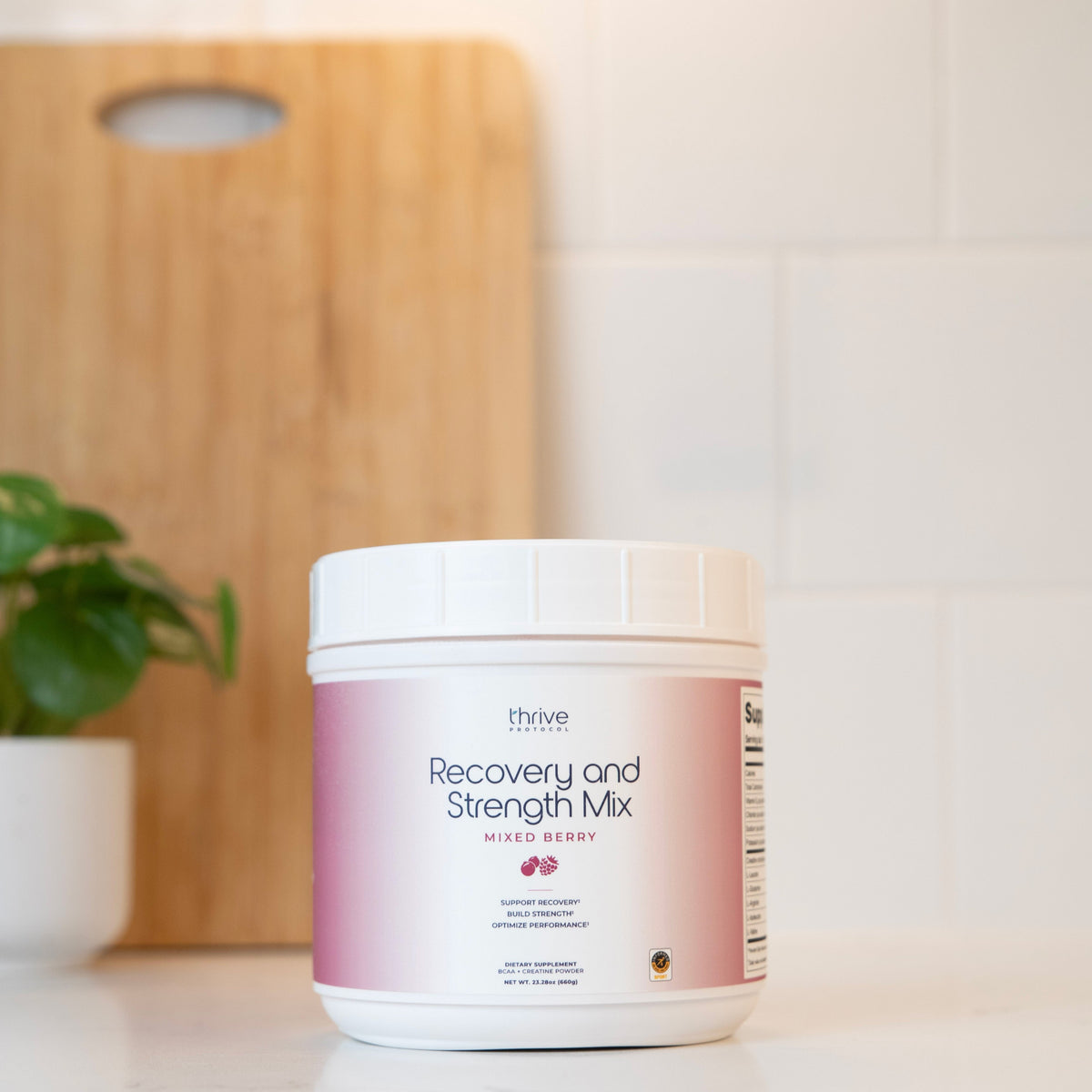
A quick disclosure: Thrive Protocol was founded by surgeons, and this is Thrive's blog. Food should do most of the work. Still, eating 120 grams of protein a day while you're sore and stuck on the couch is harder than it sounds, and that's the gap our kits are built for. Each OptiFuel packet has 25 grams of whey protein and 3 grams of leucine, plus collagen, omega-3s, curcumin and vitamins, one packet a day. If your surgery is still ahead, the Surgical Protocol Kit starts about a week before and includes OptiCharge for the night before. If you've already had surgery, the Recovery Protocol Kit is the same OptiFuel without OptiCharge. Later in rehab, when you're back to lifting, the Recovery and Strength Mix is designed to support muscle recovery and strength. Both kits are Informed Sport tested, made in the USA and HSA/FSA eligible. Run any supplement by your surgeon first.
These statements have not been evaluated by the Food and Drug Administration. This product is not intended to diagnose, treat, cure, or prevent any disease.
Get the free Surgery Recovery Guide
Our free Surgery Recovery Guide lays out eating, hydration, movement and sleep for the weeks after surgery in one simple plan. Download it and share it with whoever is cooking for you.
If you want help hitting your protein numbers, take a look at the Recovery Protocol Kit. For the full before-and-after plan built around it, see our ACL recovery nutrition guide. Code THRIVE10 takes 10% off your order. For more on why leucine matters, read why leucine is important around surgery.
Frequently asked questions
How much protein should I eat after ACL surgery?
Most people do well with at least 1.2 to 1.5 grams per kilogram of body weight a day, and athletes often aim for 1.6 to 2.0 g/kg. For a 75 kg person that's about 90 to 150 grams a day, split over four meals. Ask your surgeon or a dietitian to confirm your number.
What should I eat right after ACL surgery?
For the first day or two, keep it bland and easy: soup, crackers, toast, yogurt, eggs, rice and bananas, with plenty of fluids. Anesthesia and pain medicine can upset your stomach. Once you feel steady, move back to normal meals with protein at each one.
Should I eat less after ACL surgery since I can't train?
No. Eating too little speeds up muscle loss while your leg is inactive. Aim for roughly your usual intake during the first several weeks, with protein at every meal. You can fine-tune your intake later in rehab once you're training again.
What foods should I avoid after ACL surgery?
Skip alcohol, especially while you take pain medicine. Limit sugary drinks and snacks that replace real meals, and avoid nicotine. Check with your surgeon before starting any new supplement, since some interact with blood thinners.
Do supplements help after ACL surgery?
Research is early. A 2026 review found higher protein intake was linked with better muscle and function, and that leucine and omega-3s showed some promise. Correcting low vitamin D may also make sense. Food comes first, and your surgeon should approve anything you add.
References
- Raghoebar S, Roozenboom-van Vliet C, van der Wal WA, et al. Nutrition and rehabilitation after anterior cruciate ligament reconstruction: A systematic review. Knee Surg Sports Traumatol Arthrosc. 2026. doi:10.1002/ksa.70441.
- Wall BT, Dirks ML, Snijders T, et al. Substantial skeletal muscle loss occurs during only 5 days of disuse. Acta Physiol (Oxf). 2014;210(3):600-611.
- Mamerow MM, Mettler JA, English KL, et al. Dietary protein distribution positively influences 24-h muscle protein synthesis in healthy adults. J Nutr. 2014;144(6):876-880.
- Tipton KD. Nutritional Support for Exercise-Induced Injuries. Sports Med. 2015;45(Suppl 1):S93-S104.
- Papadopoulou SK. Rehabilitation Nutrition for Injury Recovery of Athletes: The Role of Macronutrient Intake. Nutrients. 2020;12(8):2449.
- Smith-Ryan AE, Hirsch KR, Saylor HE, et al. Nutritional Considerations and Strategies to Facilitate Injury Recovery and Rehabilitation. J Athl Train. 2020;55(9):918-930.
- López-Vidriero E, Olivé-Vilas R, López-Capapé D, et al. Efficacy and Tolerability of Progen, a Nutritional Supplement Based on Innovative Plasma Proteins, in ACL Reconstruction: A Multicenter Randomized Controlled Trial. Orthop J Sports Med. 2019;7(2):2325967119827237.
- Shaw G, Lee-Barthel A, Ross ML, et al. Vitamin C-enriched gelatin supplementation before intermittent activity augments collagen synthesis. Am J Clin Nutr. 2017;105(1):136-143.
- Weimann A, Braga M, Carli F, et al. ESPEN guideline: Clinical nutrition in surgery. Clin Nutr. 2017;36(3):623-650.
This article is general education, not medical advice. Talk to your surgeon, physical therapist or a registered dietitian about your own recovery plan.
Protecting Muscle and Accelerating Recovery After Joint Replacement
What to Eat After Rotator Cuff Surgery